Learning in Action · 04
From a Simple Idea to 15+ Freelance Clients
It started in late 2021 with one question: why do so many small businesses still lack a proper online presence?
On this page3 sections
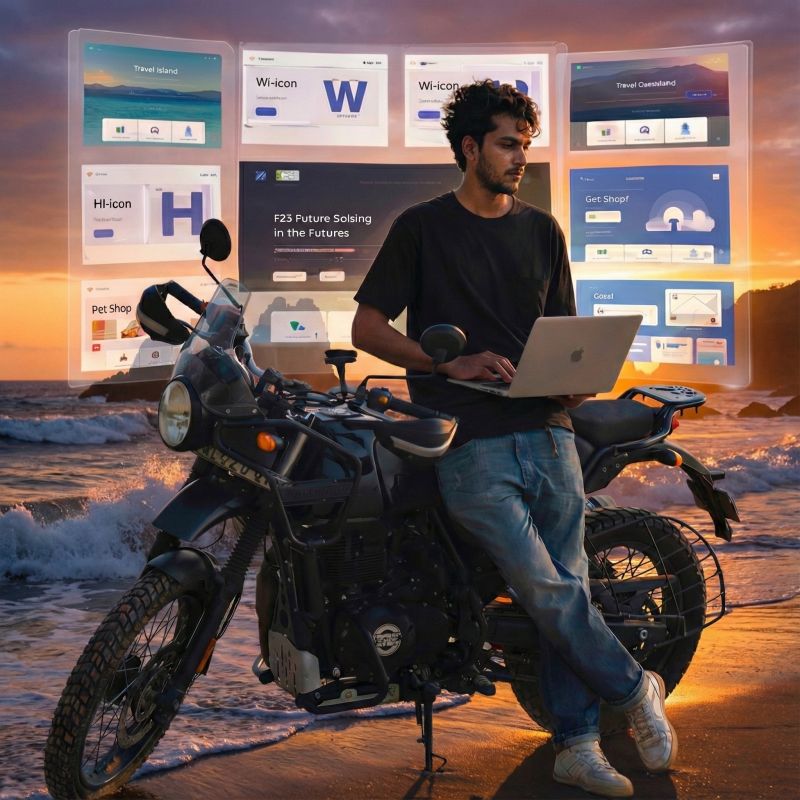
This journey didn't start with confidence or clarity. It started in late 2021 with a simple question: why do so many small businesses — restaurants, agencies, travel platforms — still lack a proper online presence?
Not complex systems. Just the basics done right:
- A clean display website
- Professional email
- Consistent brand theme and logo
- Instagram, Facebook, LinkedIn, and Google Business setup, plus basic SEO
- Meta ads only if required
In short: a basic online presence, done effectively.
Making Myself Visible
To test this idea, I first made myself visible. I created a simple service website, an Instagram page showcasing services, and printed around 100 business cards. Web designing was the core offering — everything else existed to attract people and explain the value.
Then came the uncomfortable work: giving cards to restaurants where I ate, talking to shop owners, visiting small businesses in Thalassery and Wayanad, explaining why an online presence matters.
For months, nothing converted. No paid work. Just conversations and patience. But I didn't stop.
The First Paid Project
In 2022, while discussing business expansion with someone close to me, I asked: "Can I build the website for this?" That conversation became Wayndays.com — my first paid freelance project. That moment mattered, not because of the money, but because it proved this was possible.
From there until 2024, before college ended, things slowly compounded. That same starter package evolved from static websites to custom web development to dynamic platforms to apps and small software tools, including an Android app for a clinic (heednheal.com).
By the end of college, this journey had grown into 15+ clients. It gave me strong real-world experience — and yes, good money too.
The Bigger Lessons
- Let people know you are doing this. If people don't know, nothing happens.
- Let people know how far you can go. Not just "I can make a website," but what you can actually deliver.
- Try in every possible way. Talk. Explain. Show samples. Follow up. Improve.
The first two or three projects are always the hardest. After that, things become simpler than you imagine — that's when you understand the power of referrals, word of mouth, and visible work. For me, this happened without paid digital marketing. Clear communication, visible work, and proper delivery were enough.
If you don't yet have client work to show, don't wait. Build the portfolio you want to be hired for. People trust proof, not promises.
Next in this series: how I handled pricing, client conversations, and avoided unnecessary bargaining while staying professional and confident.
Originally published on LinkedIn.
Read the series — Learning in Action
Learning in Action index- 01Starting the Learning in Action Series
- 02FundUp: How a Simple Idea Became a Finance Community
- 03Before Freelancing: What Part-Time Jobs Taught Me
- 04Why I Didn't Start Freelancing Earlier
- 04From a Simple Idea to 15+ Freelance Clients (this piece)
- 05Freelancing Lesson: Clarity, Quality, and Trust
- 06Closing the Freelance Chapter: What It Actually Taught Me

Muhammed Nasvih V
Lead DevOps & Cloud Engineer · Jeddah, Saudi Arabia
Writes The Stack Notes — field notes on infrastructure, AI, money and work. Cloud infrastructure, CI/CD, security and automation at Code7 Information Technology.