Tech Series · 06
The Internet Was Never Designed to Be This Big
It was built in the 1970s for a few hundred computers. Here is what is actually holding it together for 5.4 billion people.
On this page6 sections
The internet was designed in the 1970s for a few hundred computers, built to survive a nuclear attack by rerouting traffic.
Today it connects 5.4 billion people and moves massive amounts of data every day.
Nobody planned for this. And yet — it works.
Here is the invisible infrastructure holding it all together.
The Internet Is Not a Cloud. It Runs on Physical Cables Under the Ocean
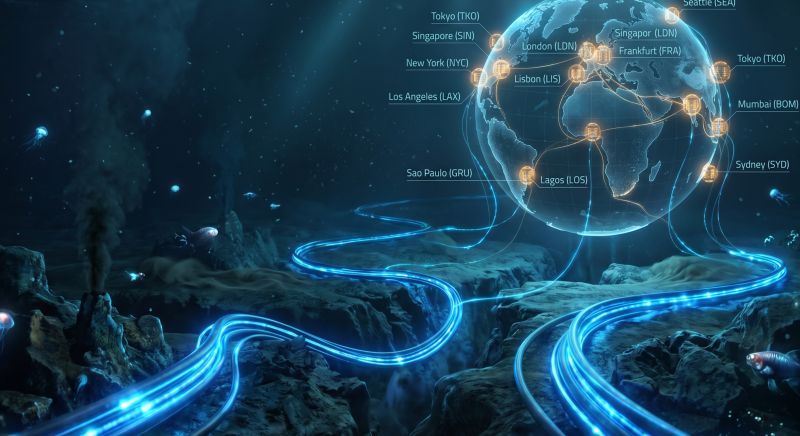
Around 99% of international traffic flows through submarine fiber cables, not satellites. Over 400 cables span the globe. A single cut — anchor, earthquake, or sabotage — can isolate entire regions. In 2022, Tonga lost internet for weeks after a volcanic eruption severed its only cable.
A Small Set of Root Systems Underpins Every Domain Lookup
DNS root servers are distributed globally but originate from just 13 logical systems, operated by organizations across multiple countries. If they failed globally, new domain lookups would stop resolving — critical infrastructure that is mostly invisible to users.
The Protocol Routing Global Traffic Has Weak Built-In Security
BGP decides how data travels between networks worldwide. Designed decades ago, it still runs the internet today, with limited authentication that allows misrouting incidents. In 2010, a routing event redirected roughly 15% of traffic through China for about 18 minutes.
Without CDNs, Large-Scale Traffic Would Overwhelm Origin Servers
When millions of people access the same content, they do not hit a single server. CDNs like Cloudflare, Akamai, and Fastly distribute and cache content globally, so it loads from nearby servers — reducing latency and preventing overload.
One Bug Can Disrupt a Large Portion of the Web
In June 2021, a Fastly software bug, triggered by a routine config change, caused a global outage. Major platforms and news sites went offline simultaneously. The internet itself did not fail — but a significant portion of popular services became unreachable. It revealed a key truth: infrastructure is distributed, but dependency is concentrated.
Bottom Line
The internet was built for resilience, not this level of scale. It runs on physical cables, legacy protocols, and a small set of infrastructure providers. Every time it works at global scale, it is a quiet engineering success.
Part 7 of this series covers why the world's most expensive software still fails.
Originally published on LinkedIn.
Read the series — Tech Series
Tech Series index- 01Why DevOps (And What It Really Is)
- 02Zero to 100: Servers, Cloud, and Networking Foundations
- 03Cloud Under Fire: What Every Tech Leader Must Learn
- 04Why Big Tech Companies Still Go Down
- 05The Silent War Happening Inside Every Tech Company
- 06The Internet Was Never Designed to Be This Big (this piece)
- 07Why the World's Most Expensive Software Keeps Failing
- 08AI Is Inside Your Pipeline. Most Teams Run It Wrong.
- 09The Japanese WordPress Hack: Zero To 100
- 10VPN: What It Is, Who It's Actually For
- 11Why "Full-Stack" Stopped Being Optional
- 13What Is System Design And Why You Should Care

Muhammed Nasvih V
Lead DevOps & Cloud Engineer · Jeddah, Saudi Arabia
Writes The Stack Notes — field notes on infrastructure, AI, money and work. Cloud infrastructure, CI/CD, security and automation at Code7 Information Technology.